Explore Collection
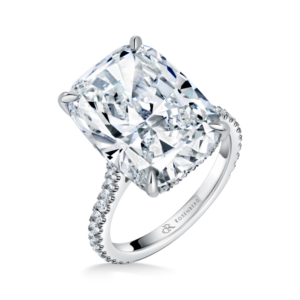
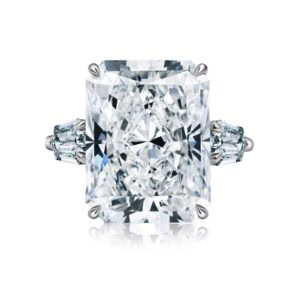
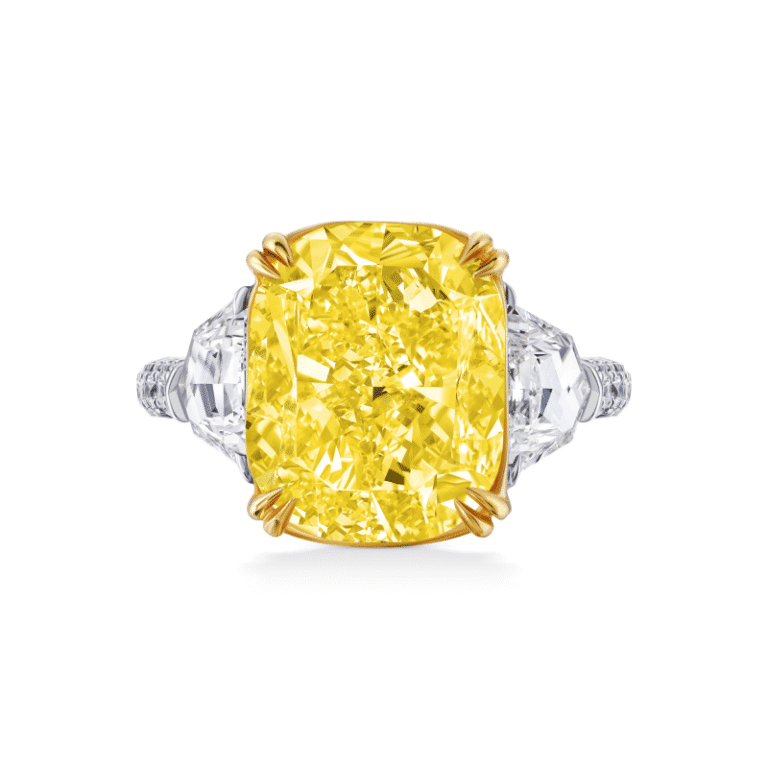
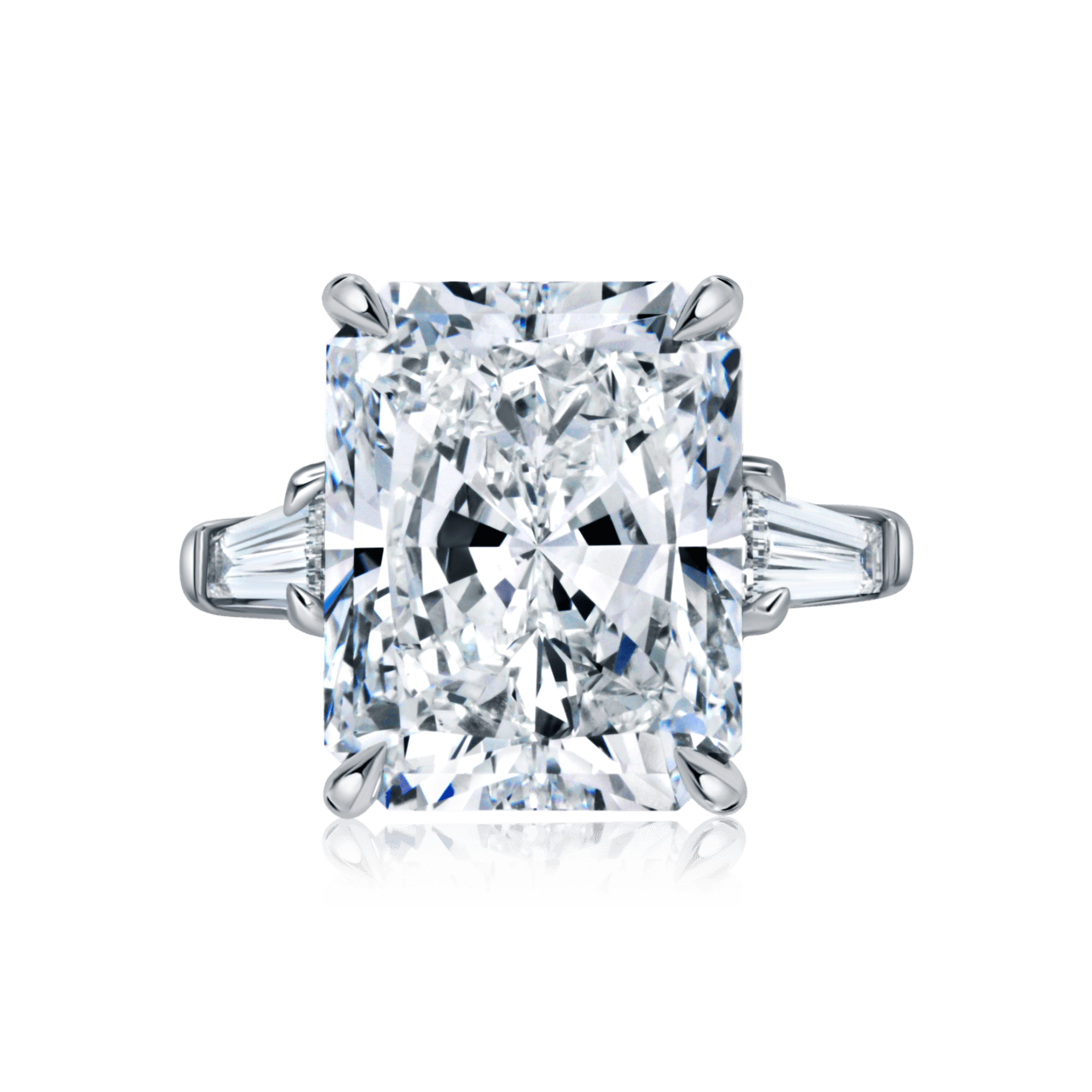
The radiant cut combines the brilliance of a round brilliant (70 facets in a modified brilliant pattern) with the silhouette of an emerald cut (rectangular outline, cropped corners). Designed in 1977 by Henry Grossbard, it remains the highest-performance fancy shape for both white diamonds and fancy colors — particularly yellows, where its facet geometry amplifies saturation more efficiently than rounds or step cuts.
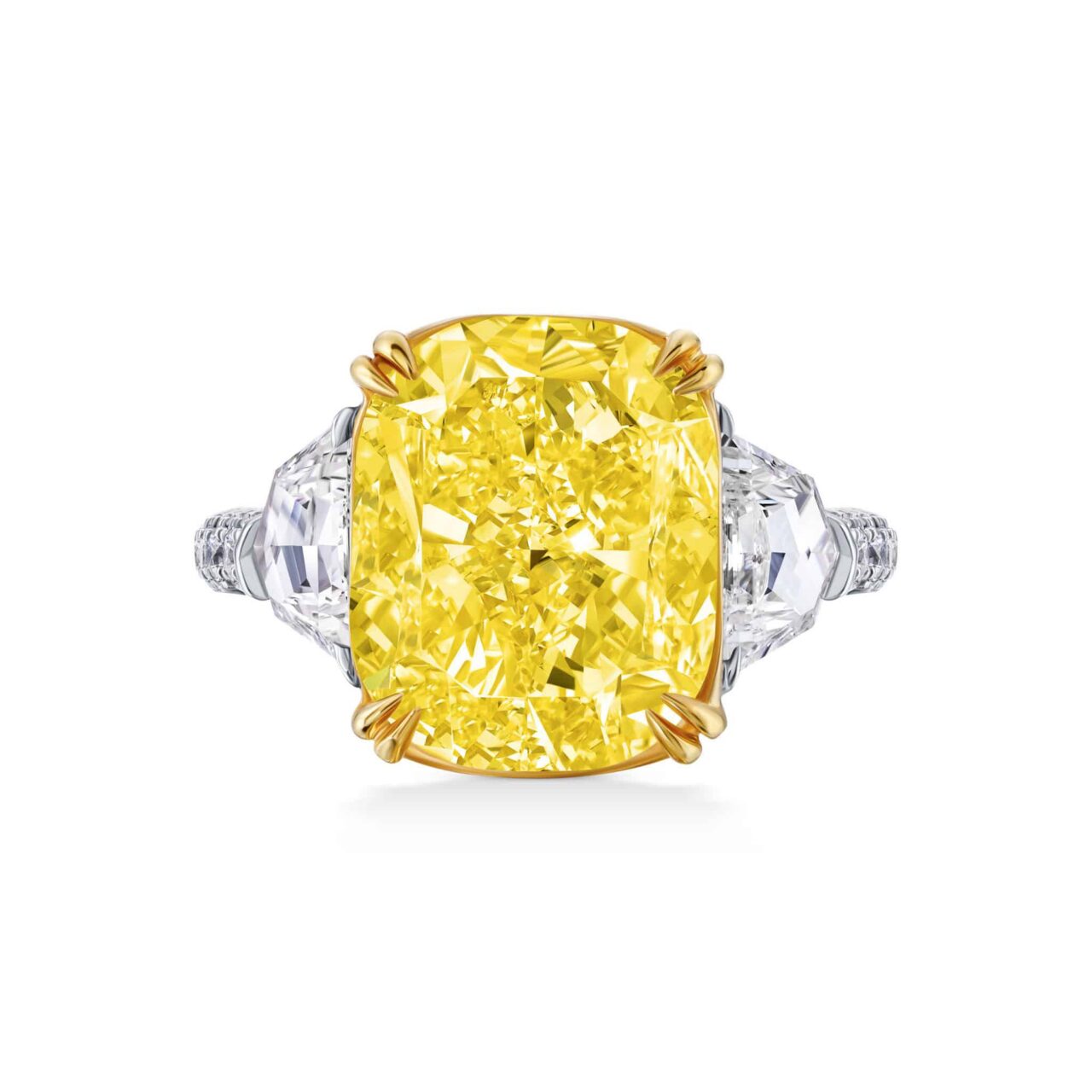
This collection covers radiant-cut engagement rings from 1 carat through above 10 carats, in solitaire, three-stone (typically with tapered baguettes), and halo designs. Center stones are GIA-certified in white (D-H color) or Fancy Yellow grades. Settings are predominantly platinum, with hybrid platinum/yellow-gold options on fancy color centers.
GIA-certified radiant cut diamond engagement rings — 70-facet brilliance with rectangular elegance, hand-fabricated in platinum and 18kt gold.
Why Radiant Cut Engagement Rings
The radiant cut’s 70-facet brilliant pattern returns light more aggressively than any step cut (emerald, asscher) while retaining the rectangular profile that reads as elegant and architectural. For a buyer who wants the silhouette of an emerald cut without sacrificing brilliance, the radiant is the answer.
Clarity tolerance is between brilliants and step cuts. VS2 is the practical floor on a radiant cut engagement ring — the brilliant facet pattern hides small inclusions better than emerald-cut step facets, but the cropped corners and large table can still show larger inclusions face-up. Cut quality on radiants is graded on polish and symmetry rather than the GIA Excellent/Very Good cut scale used for rounds.
Frequently Asked Questions
How does a radiant cut compare to a cushion cut?
Both are brilliant-faceted fancy shapes, but radiants have cropped (45-degree) corners and a more rectangular outline, while cushions have rounded corners and a more square-to-square-ish silhouette. Radiants read more architectural; cushions read more romantic. Both forgive lower clarity grades than step cuts.
Is the radiant cut more expensive than a round brilliant?
Generally no — at the same color and clarity grade, radiant cuts are typically 10-20% less per carat than rounds because they retain more rough during cutting. The same budget often buys 0.20-0.50 carats more visual size in a radiant versus a round.
What clarity grade should a radiant cut be?
VS2 is the practical floor — the brilliant facet pattern hides small inclusions better than emerald-cut step facets, but the cropped corners and table can still reveal larger inclusions face-up. For investment-grade pieces, push to VS1 or VVS2.
Why is the radiant cut popular for fancy yellow diamonds?
The radiant cut's facet geometry traps and returns body color more efficiently than rounds or step cuts. A Fancy Yellow radiant face-up reads one to two saturation steps stronger than the same stone cut as a round brilliant or emerald cut — the cut is doing real work for the apparent color.
Experience luxury like never before. Discover our collection of white diamonds and make every moment memorable
Speak with an Advisor