

Explore Collection
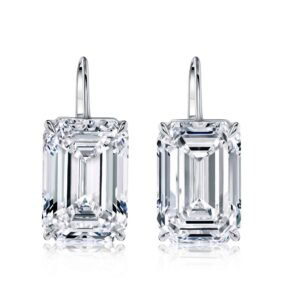
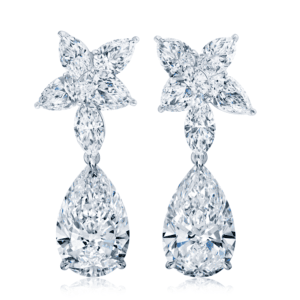
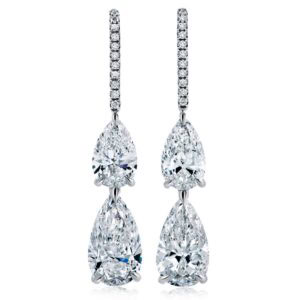
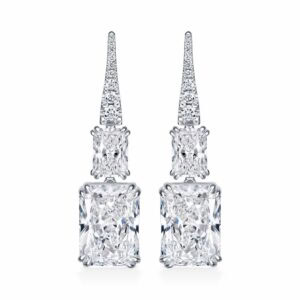
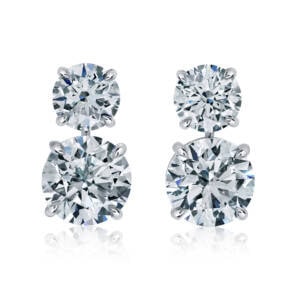
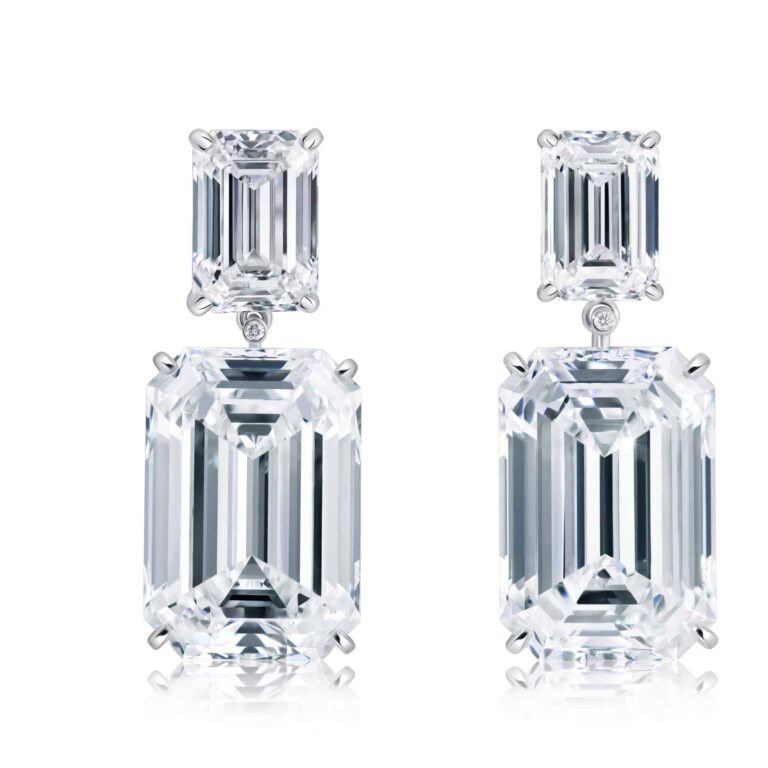
44 Carat E-F VVS2-VS1 Emerald Cut Diamond Drop Earrings
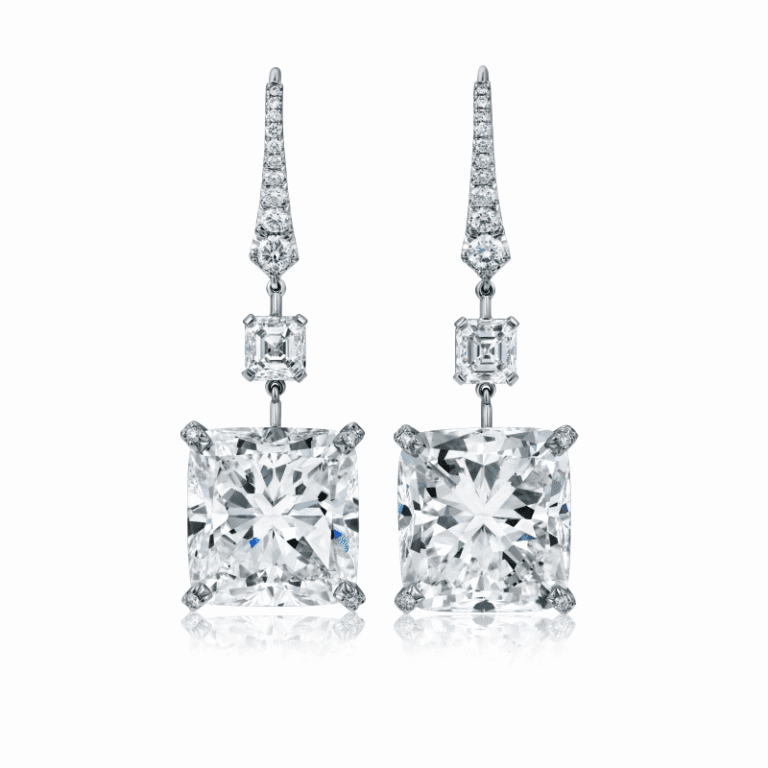
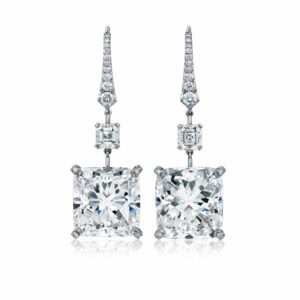
30 Carat D Flawless Cushion Cut Diamond Earrings
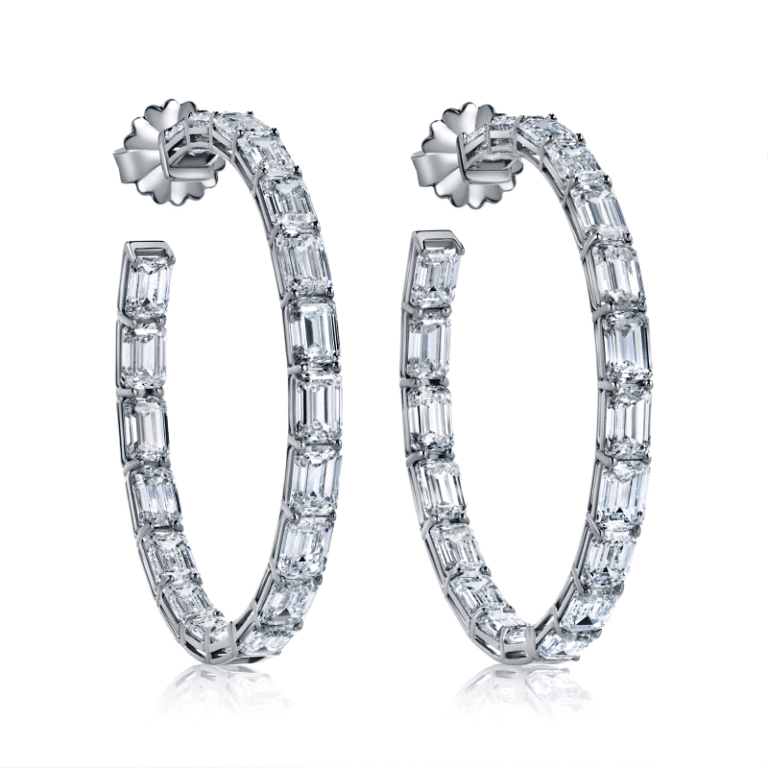
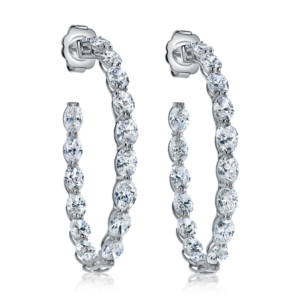
29 Carat D-F-VS2 Inside Out Hoop Emerald Cut Diamond Earrings
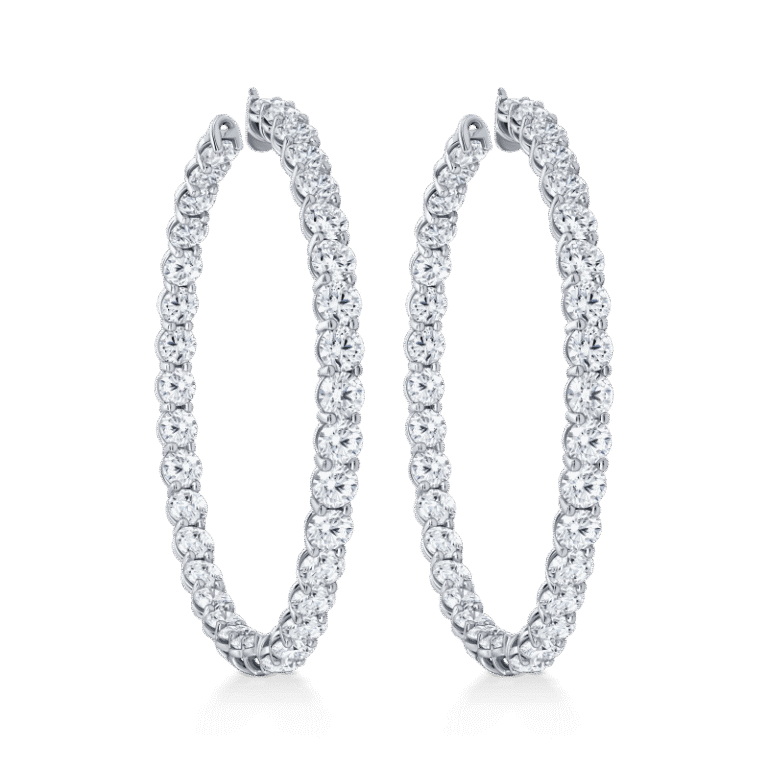
28 Carat D VS1 Inside Out Hoop Round Brilliant Cut Diamond Earrings
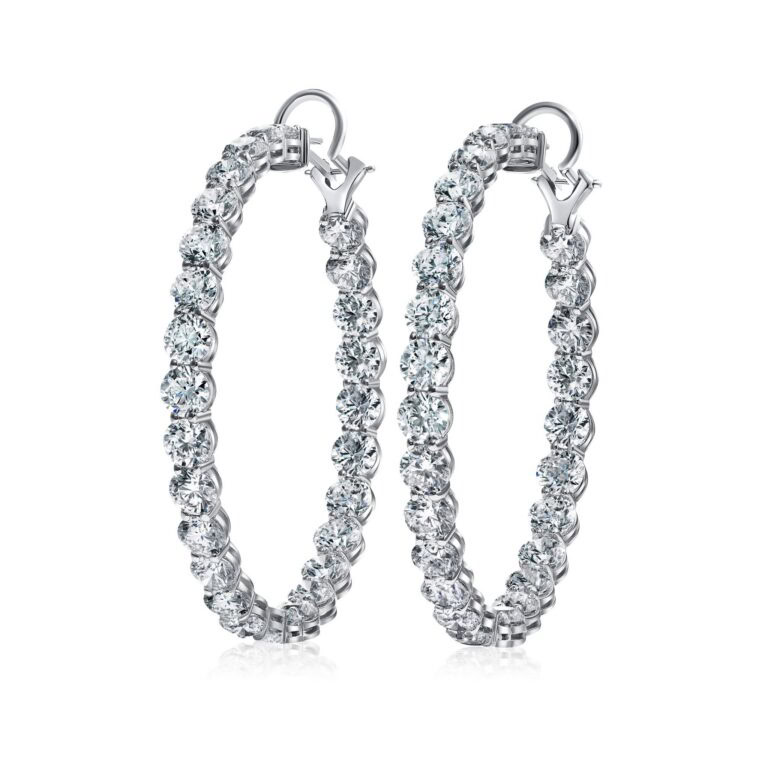
23 Carat H VS1-SI2 Inside Out Hoop Round Brilliant Cut Diamond Earrings
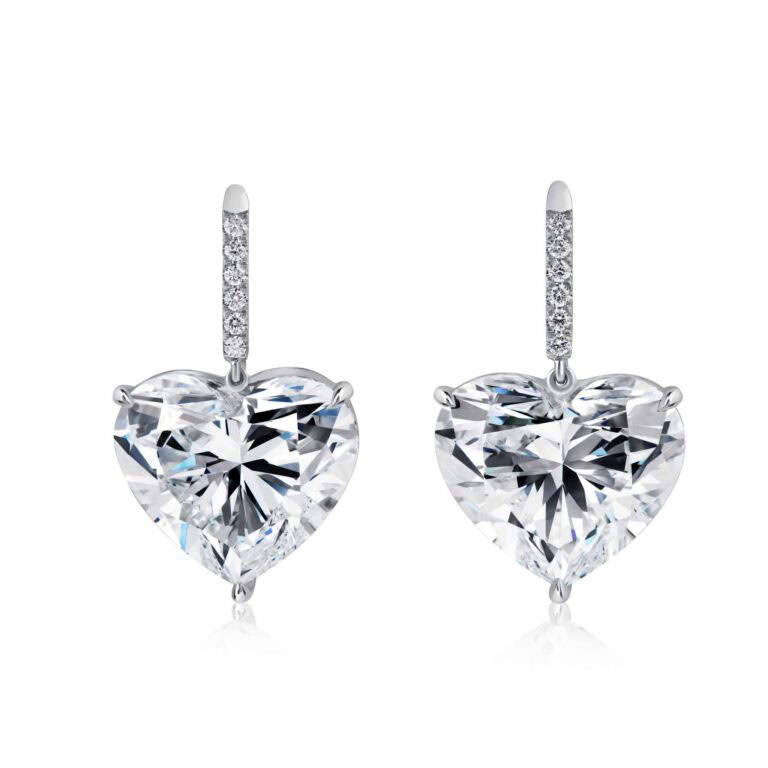
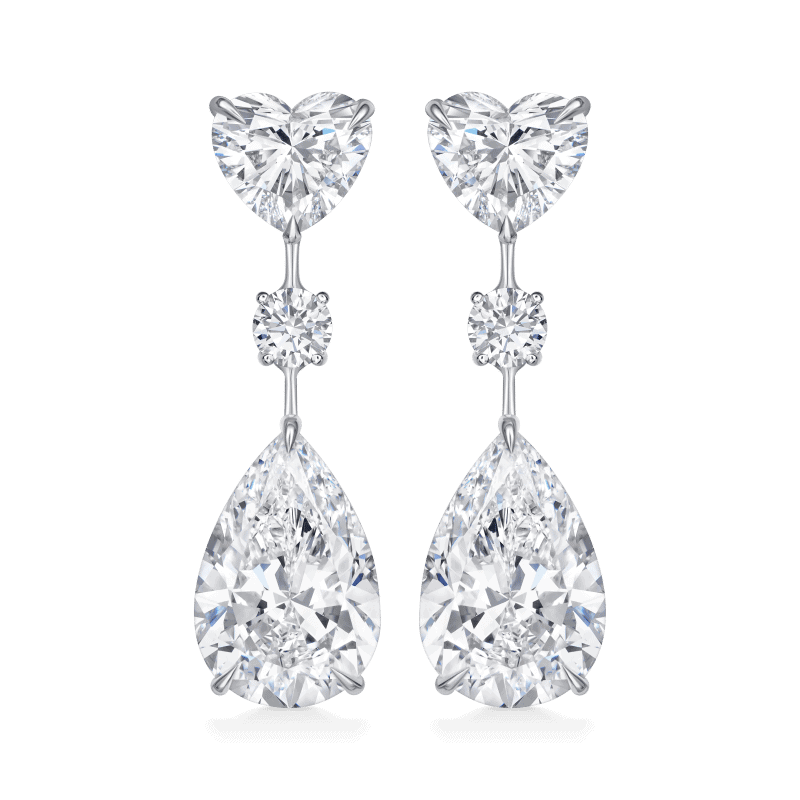
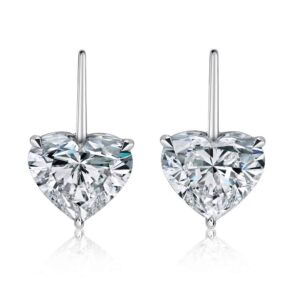
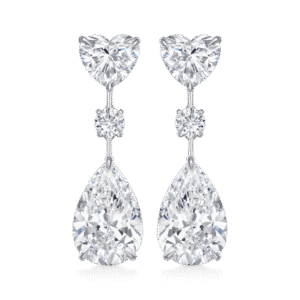
22ct D Flawless Heart Shape Diamond Drop Earrings
White diamond earrings are the most worn piece of fine jewelry in any collection — they live close to the face, catch every light source, and read at the closest social distance. This collection focuses on colorless and near-colorless grades (GIA D through H), in studs, hoops, drops, and chandeliers, matched by hand into pairs in our New York atelier.
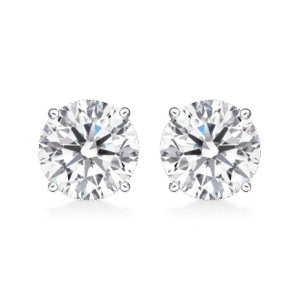
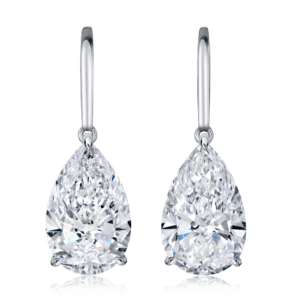
Stud weights run from 0.50ct total (0.25ct per ear) for delicate daytime studs to above 20ct total for collector pieces. Drop and chandelier earrings carry 5–30+ total carats of mixed shapes — typically round brilliants in the body of the design with pear, marquise, or emerald-cut accents for movement.
Platinum is the default metal for D–F color: dense, neutral, hypoallergenic, and unable to influence the stone’s apparent color. 18kt white gold is offered for clients who prefer a slightly warmer metal feel; below H color we recommend white gold sparingly because it can pull warmth into the stone’s appearance.
GIA-certified colorless diamond earrings — D-F color studs, hoops, and drops in platinum and 18kt white gold.
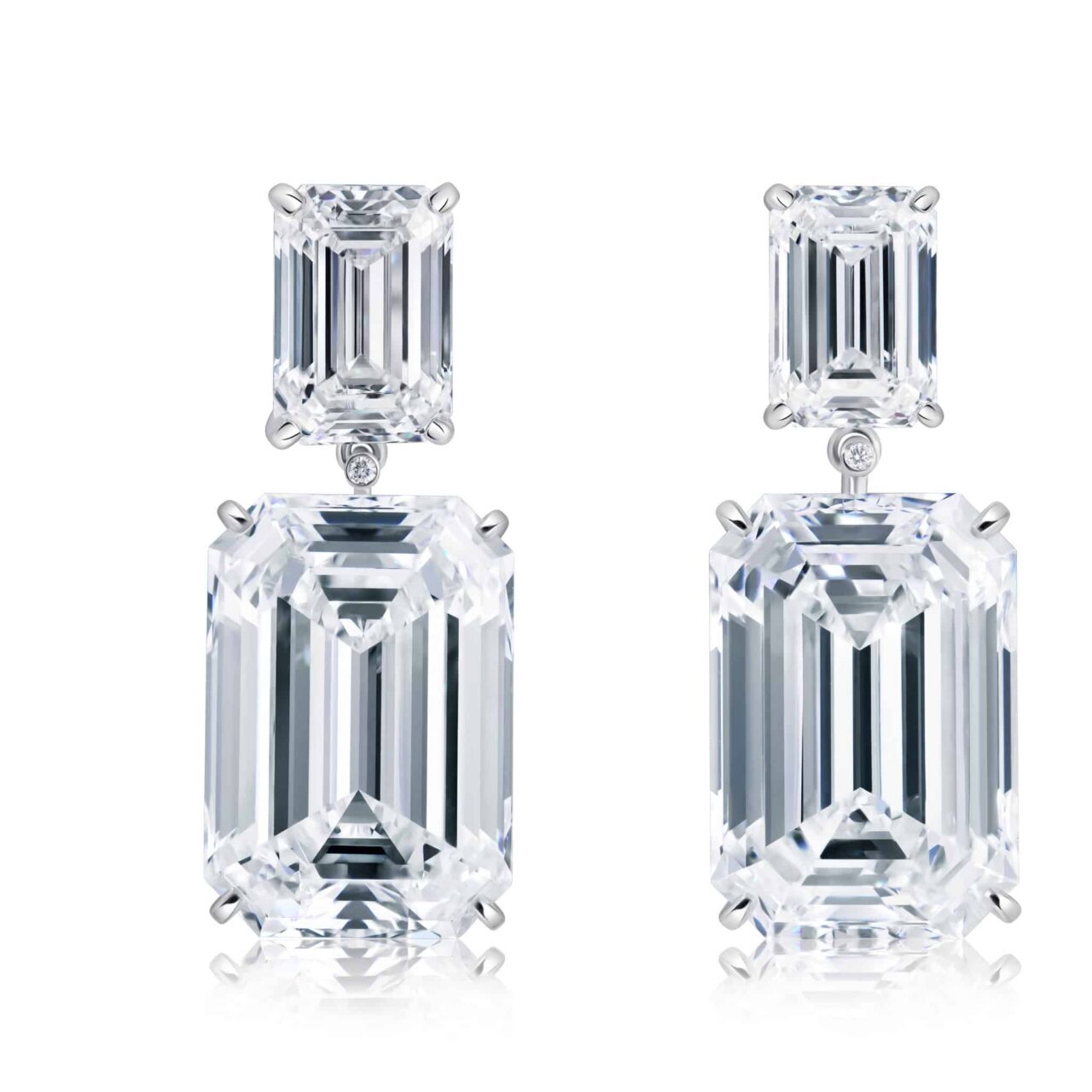
White Diamond Earrings — Color and Clarity in Pairs
A pair of white diamond earrings is judged on the visual match between the two stones, not just their individual grades. Two GIA-certified F-color stones from different rough sources can still read differently on the lobes — fluorescence, undertone (slightly yellow vs slightly brown), and cut proportions all contribute to face-up appearance.
For colorless studs (D–F), the price ladder is steep: a D pair commands a 30–40% premium over a comparable G pair, and a D Flawless pair above 3 carats per stone is a six-figure piece. For everyday wear, an F–G VS pair delivers virtually identical visual results at a meaningful discount and is the most-bought specification in this collection.
Fluorescence is an under-discussed factor in earrings specifically. Strong blue fluorescence under daylight can mask faint yellow in J–K stones — a feature, not a flaw — but in D–F stones, strong fluorescence sometimes causes a slight hazy or oily appearance face-up that’s most visible at the close range earrings are viewed from.
Frequently Asked Questions
What color grade should I look for in diamond studs?
F–G is the practical sweet spot — face-up colorless on the lobe and a meaningful discount versus D–E. For daily wear in platinum, you cannot visually distinguish an F from a D at conversational distance. D–E is reserved for collector pieces and high-jewelry statement studs.
Are larger studs always better?
Not necessarily. Lobe size, cartilage flexibility, and ear shape all factor into how a stud sits and reads. A 2-carat-per-stone pair sits flat and proud on a typical adult lobe; 3+ carats per stone often requires reinforcement (alpha backs or screw posts) to stay upright through the day. We recommend trying sizes in person.
Does fluorescence affect a diamond earring?
In D–F stones, strong blue fluorescence can sometimes create a faint hazy appearance under direct sunlight — visible at close range, which is exactly the distance earrings are viewed from. In G and below, fluorescence is usually neutral or beneficial (masking faint warmth). We recommend None to Medium fluorescence for high-color studs.
What back style is most secure for studs?
Alpha or locking backs are the most secure for everyday wear — push-on with a release lever, much harder to dislodge than friction backs. Screw posts are the most secure of all but slow to put on and off. For studs above 2ct total, alpha backs are standard.
Related Collections
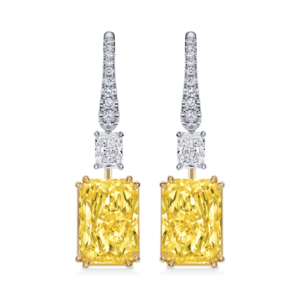
Experience luxury like never before. Discover our collection of white diamonds and make every moment memorable
Speak with an Advisor