

Explore Collection
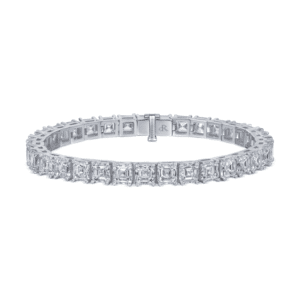
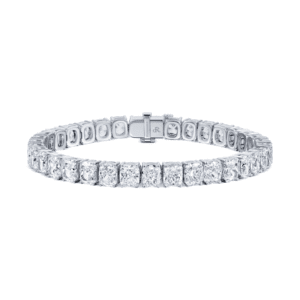
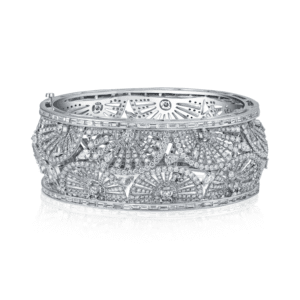
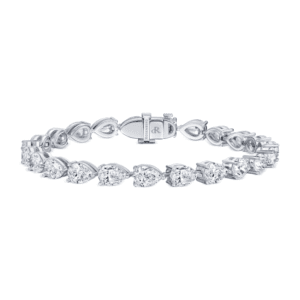
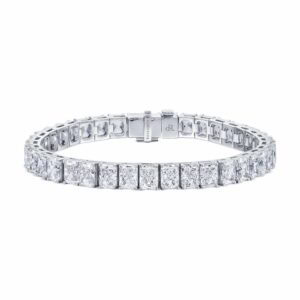
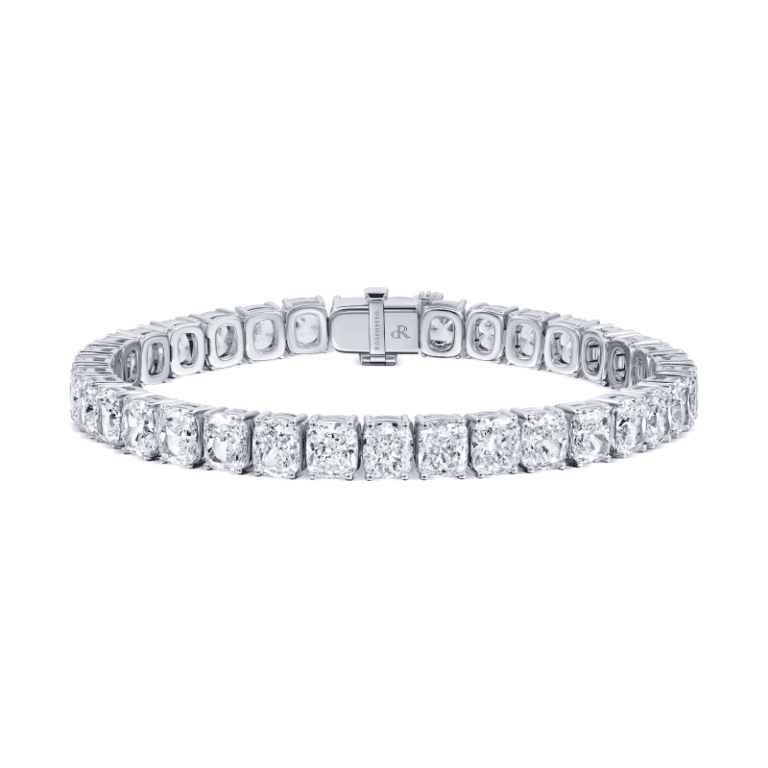
25 Carat D – F Flawless – VS2 Cushion Cut Diamond Bracelet
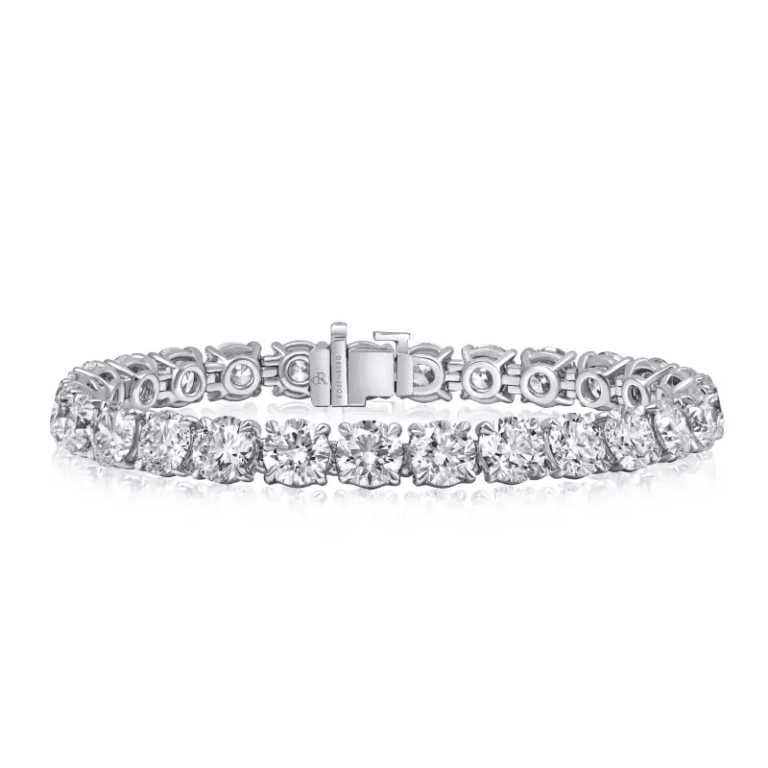
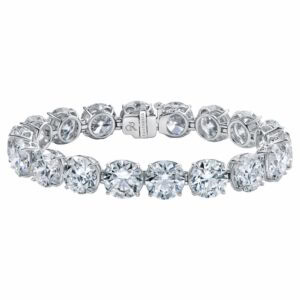
25 Carat D-F Flawless-VS2 Round Cut Diamond Tennis Bracelet
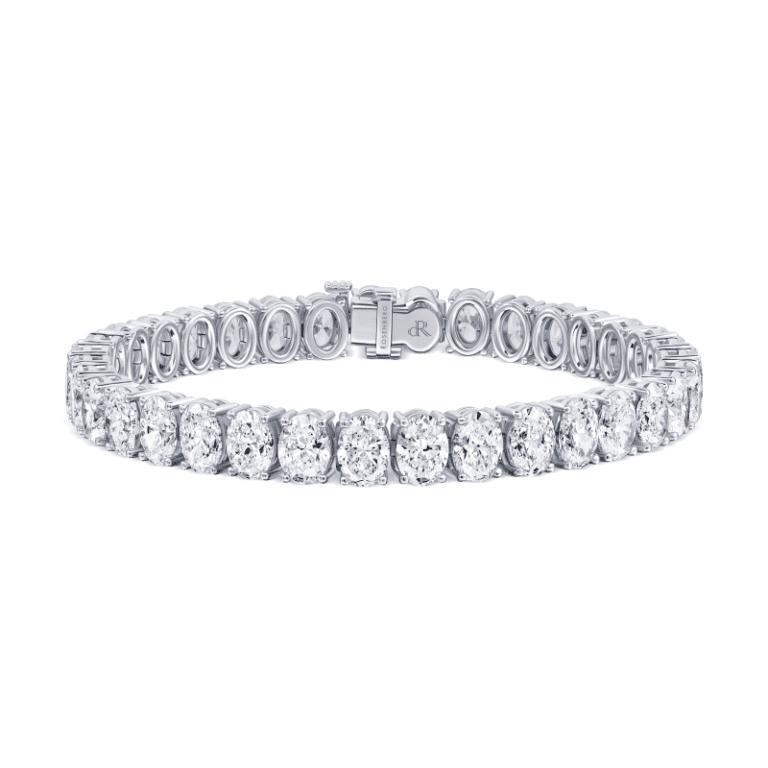
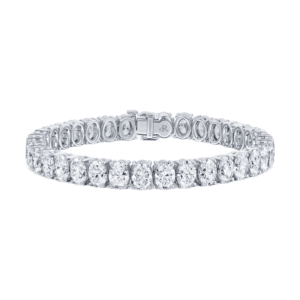
25 Carat D – F Flawless – VS2 Oval Cut Diamond Bracelet
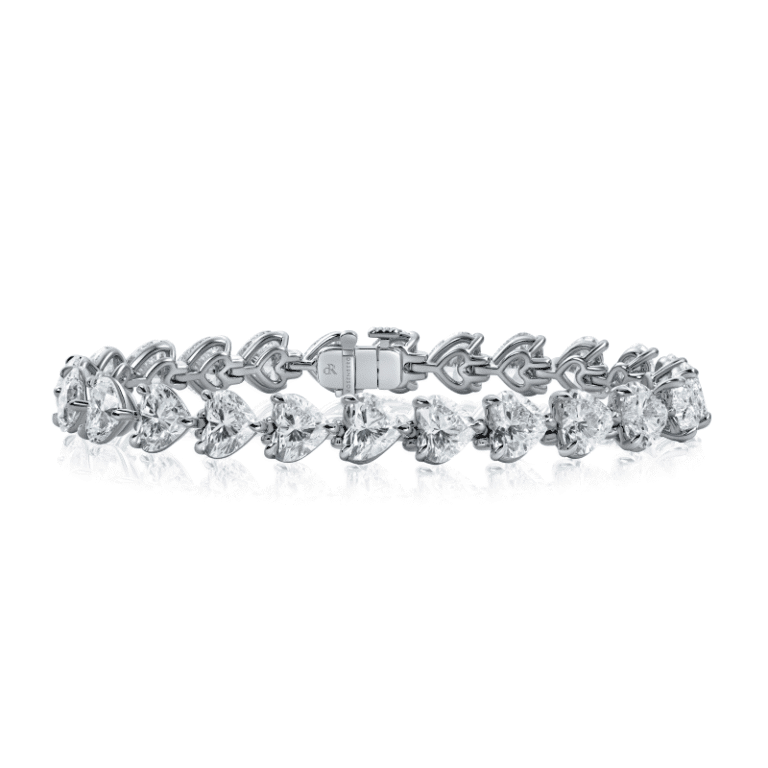
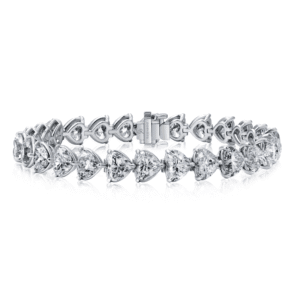
24ct D-F Flawless-VS2 Heart Shape Diamond Tennis Bracelet
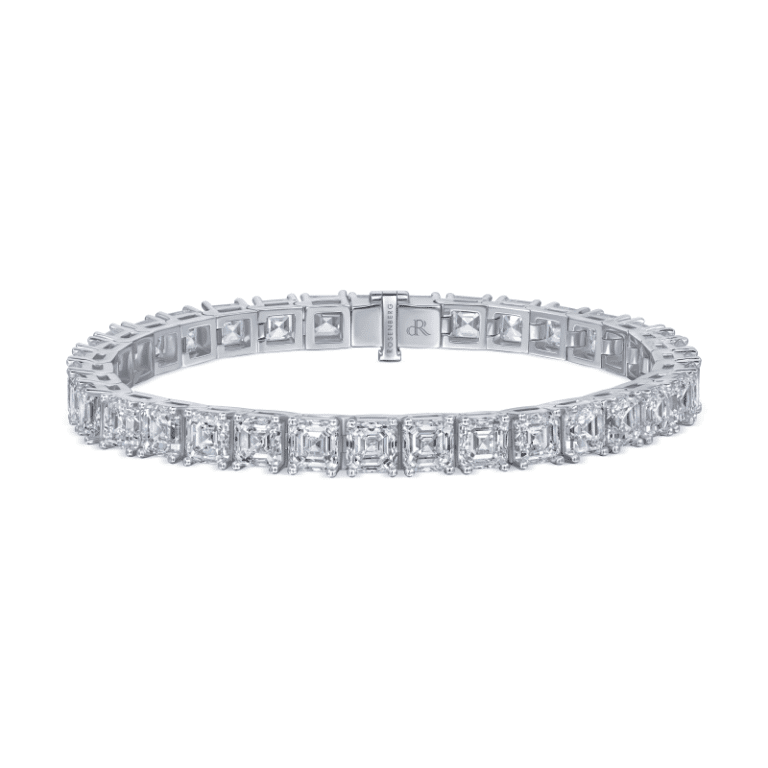
24ct D – F Flawless – VS2 Asscher Cut Diamond Bracelet
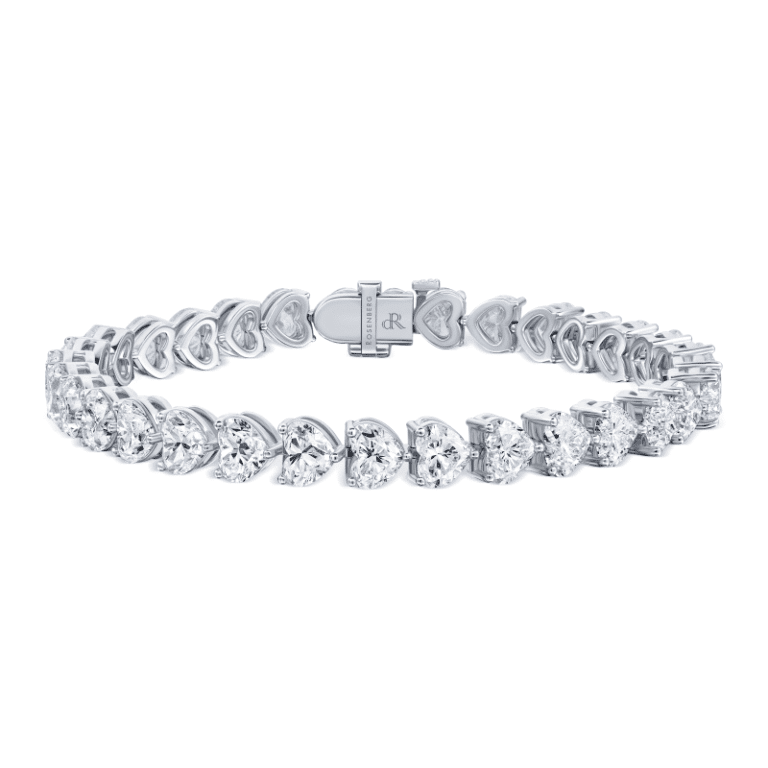
22ct D – F Flawless – VS2 Heart Shape Diamond Bracelet
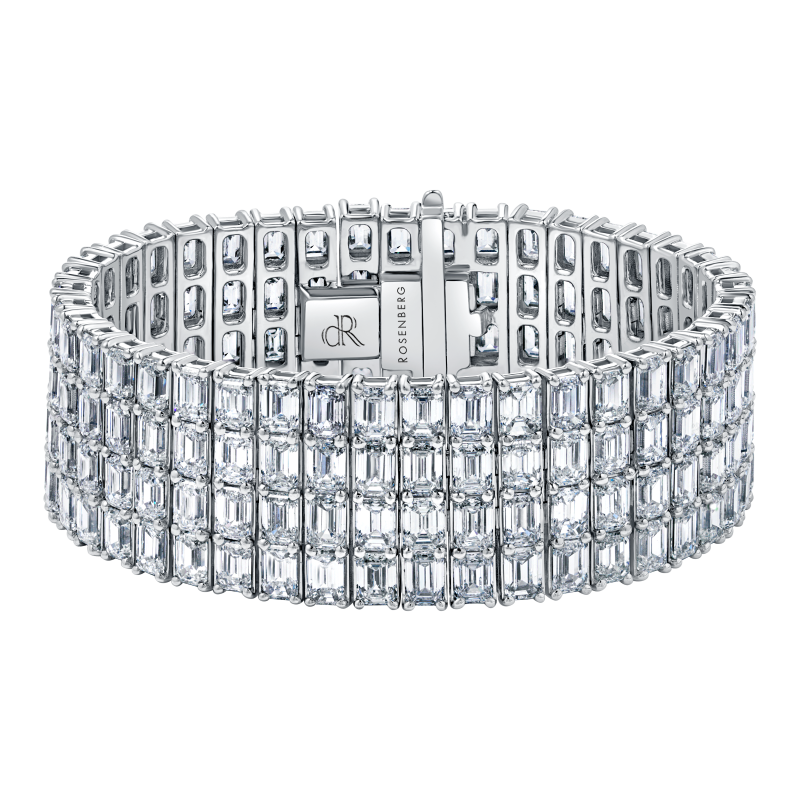
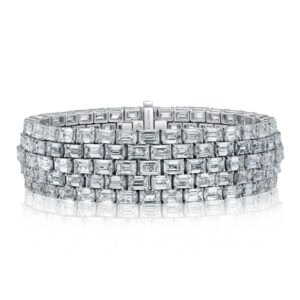
White diamond bracelets sit on the wrist at the second-most-visible point in any fine-jewelry pairing. This collection focuses on colorless and near-colorless grades (GIA D through H) in two formats: the tennis bracelet (a continuous line of uniformly sized diamonds) and the graduated bracelet (larger center stones tapering toward the clasp).
Total weights run from 3 carats for delicate uniform tennis lines to above 25 carats for graduated statement pieces. Every diamond is GIA-graded individually; in a tennis line, side stones are matched within one color grade and one clarity grade in our New York atelier. Platinum is the default metal — dense enough to resist deformation from daily wear and neutral enough to preserve the stone’s true color. Every bracelet carries both a primary box clasp and a figure-eight safety chain.
GIA-certified colorless diamond bracelets — D-F color tennis and graduated lines in platinum and 18kt white gold.
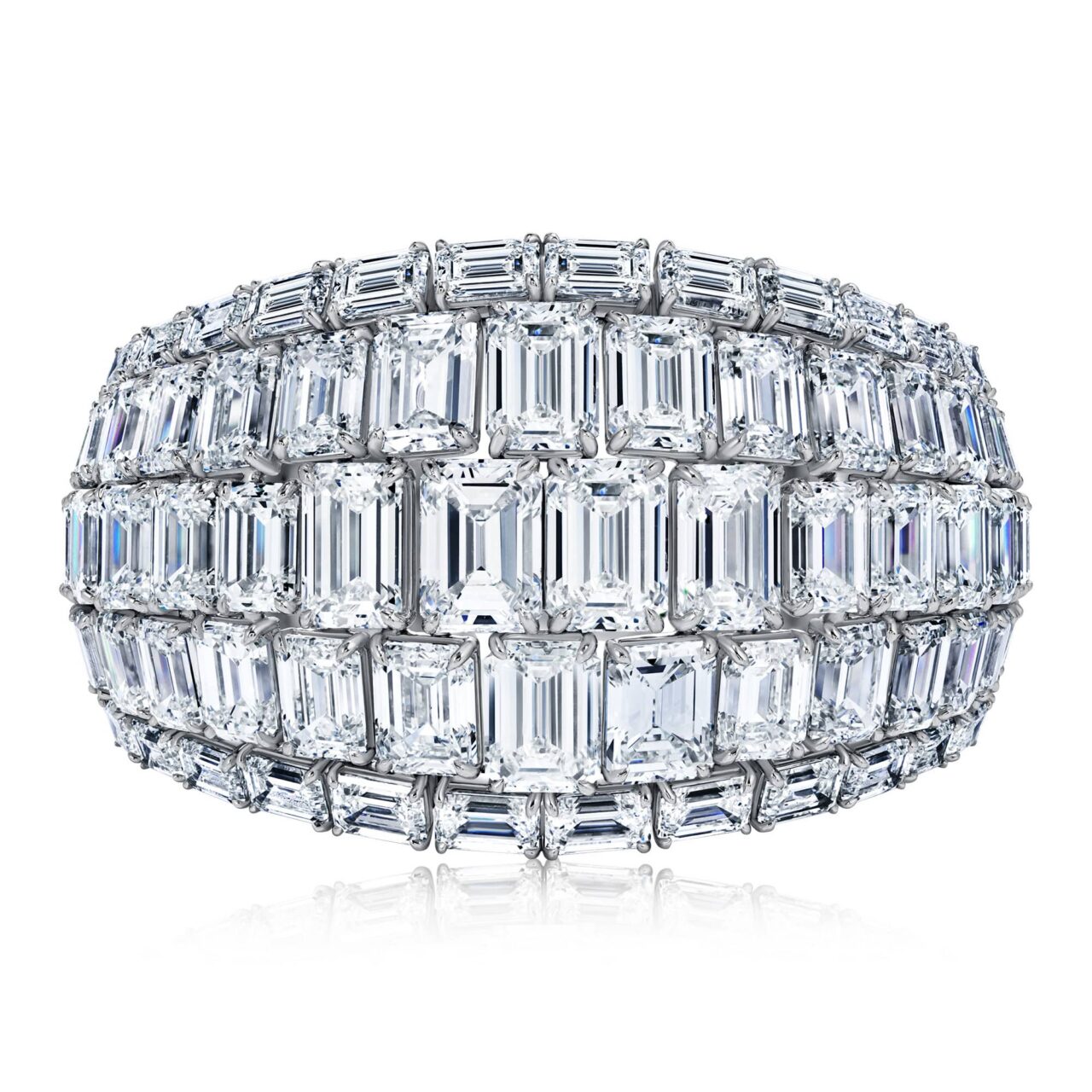
White Diamond Bracelets — Color, Match, and Clasp
For a white diamond tennis bracelet, the most important grade after weight is color match. Stones must fall within one GIA grade of each other; otherwise the line reads visibly inconsistent face-up. The most-bought specification in this collection is G/VS — face-up colorless at conversational distance, eye-clean inclusions, meaningful discount versus D/F.
Clarity is more forgiving on bracelets than on rings or earrings because the stones sit at variable angles and rotate as the wrist moves. SI1 can read eye-clean in a brilliant-cut tennis line where ring buyers would push to VS2; the rotation washes out small inclusions in motion. We still recommend VS for bracelets above 0.15ct per stone, where inclusions become more visible.
Frequently Asked Questions
What total carat weight makes a good first tennis bracelet?
5–7 total carats in 0.10ct stones is the most-bought specification — clear presence on the wrist, balanced for everyday wear, and a sub-major price point. Above 10 total carats, the bracelet reads as a statement piece.
How are tennis bracelet stones matched?
Each stone is individually GIA-graded, then pulled from inventory to match within one color grade, one clarity grade, and similar cut proportions. Mismatched lines read instantly in motion, even between adjacent grades.
Are graduated bracelets more or less valuable than tennis bracelets?
At the same total carat weight, a graduated bracelet is typically more valuable because the larger center stones carry a steeper per-carat price than uniform 0.10ct stones. A 10-carat graduated bracelet with a 1ct center can outprice a 10-carat tennis bracelet by 30-50%.
Will the clasp wear out over time?
Properly maintained, no. We use machined box clasps that engage on a sprung click and hold for decades of daily wear. We recommend a clasp inspection every 2-3 years; resoldering a worn clasp is a 1-week turnaround at no cost for original Rosenberg pieces.
Related Collections
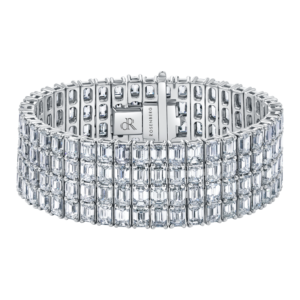
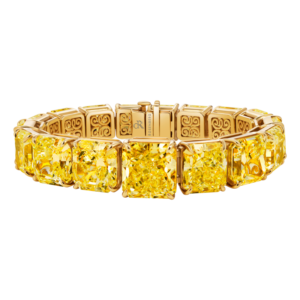
Experience luxury like never before. Discover our collection of white diamonds and make every moment memorable
Speak with an Advisor